
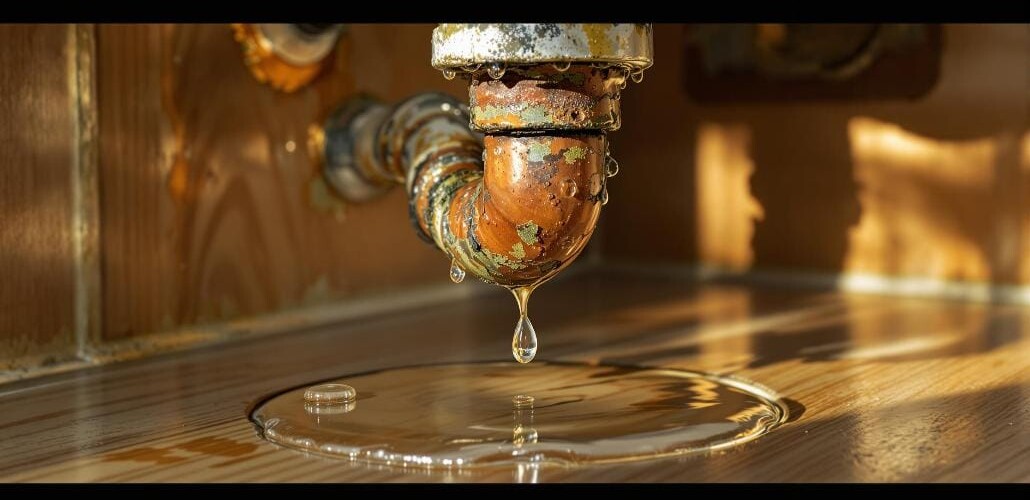
Escape of water, remains the biggest cause of home insurance claims costing insurers over £1 billion annually. More so in winter, the cold weather runs the risk of burst pipes and internal leaks increase.
Commons causes include:
- Frozen or poorly lagged pipes
- Faulty boilers
- Leaking washing machines or dishwashers
- Failing or poorly installed internal pipework
Some insurers are tightening terms, with some now restricting or excluding escape of water cover unless approved leak protection systems are installed.
What to do after a water leak:
Here’s our guide on what you need to do after you’ve noticed you’ve got a leak.
Immediately after noticing it:
You should only take the below steps if it’s safe to do so. For example, if turning off the mains electricity involves standing in water, please contact an electrician.
You should:
- turn off the main water supply via the stopcock
- drain the system by running the cold tap
- turn off the power, and avoid electrical appliances
- open doors and windows
- contact a professional to fix the issue
We recommend taking photos too, if you’re claiming.
In the days after:
- Dry out – give walls, floors and furniture enough space for air to circulate.
- Clean – you’ll need to wash and disinfect every surface in your home to prevent mould, including floors, walls and shelves when dry.
- Strip out – remove affected furniture, fixtures and plastering repair – walls need to be fully dry before they can be replastered and redecorated.
Your property might only need cleaning and drying out for smaller escape of water damage.
How to keep your home leak free:
You can take some proactive measures to lower the chance of getting a leak:
- use a stud finder if you’re doing DIY to help you find any hidden pipes
- keep your downspouts and gutters clean
- wrap or ‘lag’ your pipes to prevent them from freezing
- know where your stopcock is and how to switch it on and off
- keep the sealant (white silicone) around the shower and bath well maintained
- plan ahead if you’re leaving your home unoccupied
If you’re leaving your home unoccupied, here are some tips to protect your home:
- keep your central heating on low so your pipes don’t freeze
- leave your loft hatch open
- turn off your water supply and drain the system
- check your policy for unoccupied property conditions
What you’re typically not covered for:
- damage to any drains and pipes
- overflowing taps, as a result of any taps being left on
- faulty, failed or inadequate grout or sealant
- water escaping from external pipes that are above ground
- loss or damage caused to solid floors by infill materials settling, swelling or shrinking due to the escape of water
- loss or damage caused by subsidence, heave or landslip resulting from the escape of water
- loss or damage caused while your home is unoccupied
Being mindful of the above may help in avoiding escape of water and stop you becoming another statistic. For more information on your policy you can call us on 01256 463090.