Trees and Subsidence

The extreme hot, dry summers and reasonably dry winters in recent years has caused the insurance industry to see an increase in subsidence in buildings.

Subsidence is the downward movement of the ground supporting the building. Damage occurs because the movement is often uneven, causing cracks in walls, floors and ceilings. The main cause of subsidence
in the UK is the shrinkage in dry weather of clay soils which expand and contract with changes in their moisture content. The escape of water form leaking or damaged drains below the ground can also cause
subsidence.

Research has shown that the majority of subsidence problems involve trees to some degree. Trees more likely to cause problems than other have fine root structures longer than other species, such as poplars,
willows, elms and oaks.

Typical signs of subsidence usually show with the following:

  • Cracks from both inside and outside the property
  • Doors and windows sticking, this suggests distortion of the building

All buildings can suffer minor cracking from other causes such as “settling” when a new building has been built. Drying and shrinkage of building materials – which can be sorted during routine maintenance or redecoration.

How can we avoid issues?

  • Do not plant trees or large shrubs too close to property, including garages and outbuildings.
  • Trees that were planted before a property was built must be kept at a manageable level to ensure the amount of foliage produced is in control. This will help reduce the amount of water it requires and will avoid the tree taking over the area and potentially causing damage to property.
  • Trees that were planted before a property has been built should never be removed as this can cause uplift of the ground or “heave” (upward movement of the ground supporting the building – the opposite of subsidence).
  • Always check before altering or removing a tree whether there is a preservation order. You must obtain appropriate consent before commencing any works.

Try and always ensure you have subsidence cover within your policy. It may be that subsidence cover is excluded for various reasons but if it is included it certainly is worth having included in your policy.


Solar Panels – are you covered?

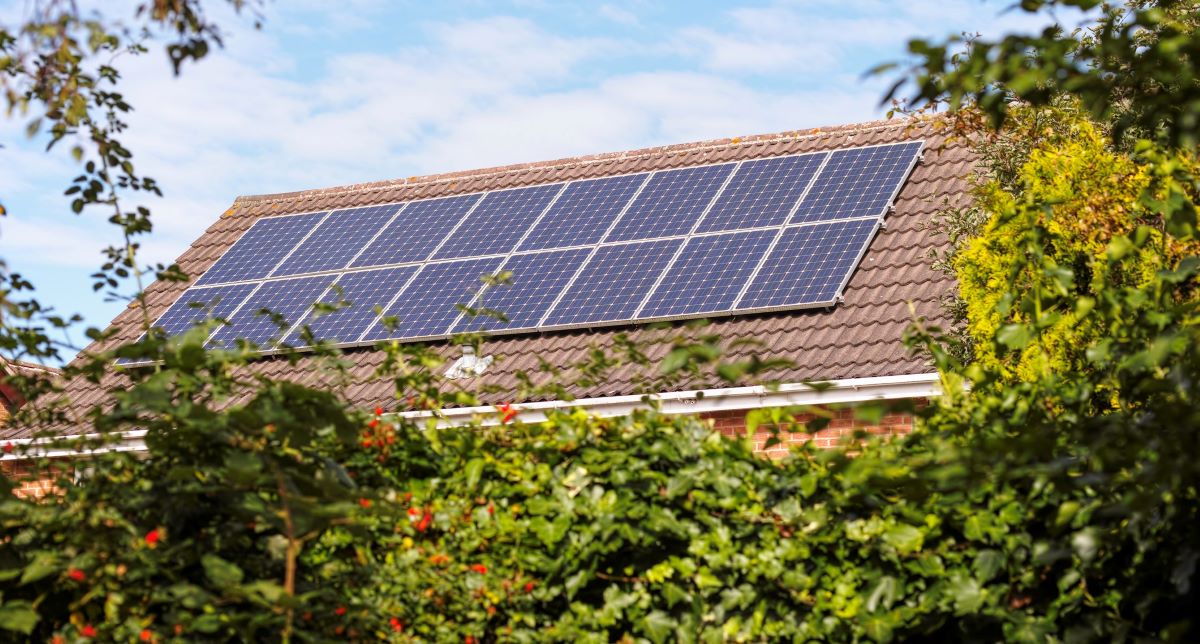
More and more people are starting to attach solar panels to their homes – in fact, in the summer months, more than a tenth of the UK electricity supply comes from solar power. That’s great news for the planet!

But there’s always the risk that something might damage your solar panels – and with a hefty installation cost, you’ll want to make sure your solar panels are protected by your home insurance. Particularly with the hotter weather we have been having this year, articles in the news have highlight a few incidents where solar panels have caused fires within homes due to faults within the installation process. That’s why it’s important more than ever that you ensure you are well covered for these types of situations.

Most insurers include solar panels as standard – which means it shouldn’t cost any extra to get your solar panels insured.

It’s always a good idea to contact your insurer when you’re making any significant changes to your property – and that includes adding solar panels. They need to know exactly what’s included in the structure of your home just in case it needs to be rebuilt.

Adding solar panels increases the rebuild value of your home, and that’s certainly something you’ll need to let them know. Additionally, you’ll want to be absolutely certain that your solar panels are included in your policy, so give them all a call if you’re considering it.

All types of solar panel should be covered by your home insurance, so long as they’re attached to your home. If you have a freestanding solar panel in your garden or on a balcony, it doesn’t count as part of the structure of your house – so it won’t be included as part of your buildings insurance.

Your home insurance will protect your solar panels against fire, water, extreme weather, falling trees, and other dangers – but what if someone damages them by mistake? It’s always worth checking with your insurer first, but in many cases your standard policy won’t include accidental damage to your solar panels.

Luckily, most insurers offer accidental damage cover as an add-on to their standard policies. It’ll cost you extra, but it means your panels will be protected if anyone breaks them by mistake.

Home insurance doesn’t cover wear and tear: it’s up to you to keep your property in good working order, and you won’t get compensated when your solar panels finally reach the end of their lifespan.

It never hurts to check you have the right level of cover for peace of mind, call us today!


The Fire Safety Act

To improve the fire safety of buildings in England and Wales, the Fire Safety Act 2021 was introduced, sections 1 and 3 of which commenced in full on 16th May 2022.

The purpose of the new FSA, which applies to virtually all premises and covers nearly every type of building structure and open space, is to simplify fire safety legislation and drive fire safety improvements for regulated premises where people live, stay or work. It will also help reduce the number of enforcing authorities that Companies have to deal with.

The FSA brings changes to the Regulatory Reform (Fire Safety) Order 2005, placing additional responsibility for compliance on the “Responsible Person” (RP), as an employer, freeholder, management company or managing agent, to minimise the risk to life from fire. This responsibility includes the completion of a relevant fire risk assessment that needs to be completed by a suitably qualified or competent person, the implementation of appropriate fire safety measures and ensuring that the fire risk assessment is kept up to date.

An increase in the duties placed on “Responsible Persons” is one of the key elements of the FSA, in that:

  • it further defines multiple occupancy as any residential building with two or more sets of domestic premises, irrespective of building height
  • the external parts of the building such as the walls, windows, balconies and cladding, will need to be risk assessed by the Responsible Person, or a specialist assessor, who must also manage and, where reasonably practicable, reduce the risk from fire
  • this also applies to the doors between premises that lead to common parts of the building
  • the Act introduces “risk-based guidance” to encourage an approach to assessing risk in-line with the building’s features

The changes mostly apply to multi-occupied, residential buildings i.e. any premises that comprise of anything other than a single dwelling. This means that, just as a high-rise building with hundreds of apartments, need a fire risk assessment and adequate fire safety measures, so does a house converted into two flats.

Another area of clarification within the FSA is the responsibility of entrance doors to individual flats that open into communal areas; these now fall to the Responsible Person to ensure they are fully compliant and maintained. The fire doors will need to have all the correct intumescent and fire-rated hardware, as well as a risk assessment.

Non-domestic premises – these include:

  • all workplaces and commercial premises
  • all premises the public have access to
  • the common areas of multi-occupied residential buildings

Shared premises:

In shared premises it is likely there will be more than one Responsible Person and fire safety plans will need to be co-ordinated to ensure people on or around the premises are safe. For common or shared areas, the Responsible Person is the landlord, freeholder or managing agent.

Alterations, extensions and new buildings:

When building new premises or doing building work on existing premises, building regulations must be complied with. This includes designing fire safety into the proposed building or extension.

The fire safety building regulations provide the full details on this.

Who’s responsible and what for?

You are the “Responsible Person” for fire safety in business or other non-domestic premises, if you are:

  • an employer
  • the owner
  • the landlord
  • an occupier
  • anyone else with control of the premises, for example a facilities manager, building manager, managing agent or risk assessor

In a workplace, the Responsible Person will be the person who has control of the premises in connection with the carrying on of a trade, business or other undertaking. If there’s more than one Responsible Person, you will need to work together to meet your responsibilities.

This also applies if you have paying guests, for example if you run a bed and breakfast, guesthouse or let a self-catering property.

As the Responsible Person you must:

  • carry out a fire risk assessment of the premises and review it regularly

or

  • alternatively arrange for the fire risk assessment to be completed if you do not have the necessary competence
  • tell staff or their representatives about the risks you’ve identified
  • put in place, and maintain, appropriate fire safety measures
  • plan for an emergency
  • provide staff information, fire safety instruction and training

The Fire Safety Act also now makes enforcement action against Responsible Persons – prosecution for instance – far easier by the fire service and Government. You could be fined or go to prison if you do not follow fire safety regulations.

As such, risk assessments are your best defence as they enable you to not only ensure you’re doing everything practically possible to prevent and protect against fire in the first place, but also to prove it.

Local fire and rescue authorities inspect premises and can issue fire safety notices telling you about changes you need to make.


The Average Clause

Insurance can be complex. Contracts are always full of conditions and clauses.

There is one clause you really need to know about when insuring your building because this clause can cause big problems if you ever need to make a claim.

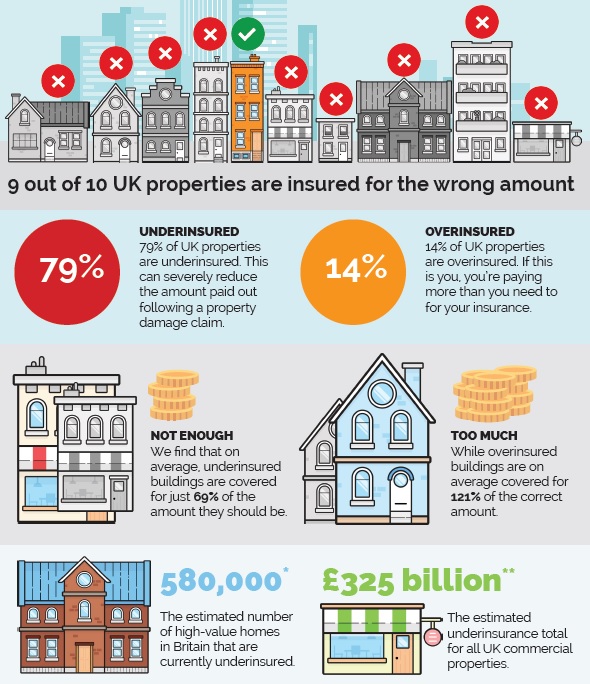
It’s known as “The Average Clause” and it means if you insure your building for amount that is too low, your insurer can reduce how much they’ll pay out.

There is one way to ensure you don’t suffer the issue of not being insured for the correct amount and feel the full force and consequences of the Average Clause. Get in touch with a Regulated by RICS property professional who understands about rebuilding costs.

We work with professionals of building insurance valuations to ensure that our clients are covered for the correct amount of re-build costs.

Don’t fall fowl to the Average Clause. Put your buildings insurance right and let us help by talking to us today 01256 463090.

Insurance market seeks to ‘deny’ claims from owners of 500 aircraft seized by Russia

Lloyd’s of London looks to be getting ready to defend against the owners of hundreds of aircraft seized by Vladimir Putin’s regime. It is understood they have hired law firm Clyde & Co to advise on whether it can “deny” claims against planes worth up to $10bn (£8bn).

The Kremlin is transferring around 500 aircraft to the Russian register to put them out of reach of the leasing companies that own them.

The move is considered illegal, according to experts, and amounts to the Russian state “stealing” aircraft owned by leasing companies based in tax-friendly jurisdictions.

Dublin-based AerCap, the world’s biggest aircraft leasing company, has hired law firm Clifford Chance to advise on challenging negotiations on claims totalling $3.5bn, according to sources.

It believes that policies taken out by Russian airlines should cover losses.

Lloyd’s is uniquely exposed to losses in Russia by virtue of the roughly 90pc of so-called “Hull War and Allied Perils” insurance cover being written by the London market, according to brokers. This type of insurance protects holders against the fallout from the war.

Brokers and underwriters are yet to ascertain which parties hold the “risk”, which means they would need to pay out to leasing companies, according to insurance industry sources.

AerCap plans to claim against the insurance policies held by airline operators such as Aeroflot. If they fail to pay out, the Irish firm will then seek to recoup its losses against its own insurance cover – a move that Lloyd’s sources say is yet to be tested in the courts.

Hurricanes Katrina, Rita, and Wilma, which hit the US mainland in 2005, led to Lloyd’s suffering insurance losses of £2.9bn – the worst on record.

But Lloyd’s insiders say that questions remain as to which insurance firms will foot the bill for the “stolen” planes amid fears that syndicates could have ended up insuring each other in a cyclical fashion.

“The situation is still evolving, it is too early for us to comment on the potential exposure and too early for us to determine the extent specific classes will be affected.”

“However, we are approaching this problem in a systematic and thorough way while engaging key stakeholders in the process.”

Speaking as it emerged that AerCap was claiming $3.5bn from insurers for the seized planes, chief executive Aengus Kelly said at the end of March it intended to claim against insurance policies held by Russian airlines such as Aeroflot.


Home Renovations / Insurance Builders need

No matter what building work you’re having done, everyone wants their home improvements to go well with no “hiccups” along the way. If something goes wrong, insurance may be able to step in. That’s why as a homeowner, you’ll want to know that any tradesperson you have working for you, has the right cover in place.

Public liability insurance can cover legal and compensation costs if someone is hurt or killed, or their property is damaged a result of their work. For example a post-worker may trip over your builders tools and injure themselves. This cover is a legal requirement, but if your builder doesn’t have it – you should consider having this cover yourself.

Employers liability covers your builder if one of their employee’s is injured or killed whilst working on your home improvements. It is a legal requirements to have this insurance.

What happens if a storm damages a partial build that isn’t completed yet? Contract works insurance is designed to cover any works in progress that have been affected by certain scenarios listed on a policy.

A reputable builder should happily want to show you their certificates before you hire them. Always ensure you check how long the policies are valid for as your building work may take some time to complete.

It is essential that you let your home insurance provider know when you’re having work done so you can make sure the policy remains valid. It may be worth considering taking out accidental damage insurance and legal cover just in case there are any issues with the work completed.

Always ensure you are fully insured before beginning your renovation journey!

UK to block Russian aerospace companies from its insurance sector

The UK have announced they will bring further sanctions preventing Russian aviation and space industry companies to get access to the British insurance sector.

Russian aerospace companies will be prevented from making use of UK based insurance, the country’s government announced as a response to the invasion of Ukraine by Russia. The Treasury said that these new economic sanctions “will limit the benefits Russian entities receive from their access to the global insurance and reinsurance market.”

The British government will come up with legislation to prohibit insurance and reinsurance providers from “undertaking financial transactions connected with a Russian entity or for use in Russia,” with further details on the legislation coming “in due course.”

The move will block Russian companies operating in those sectors from the UK’s insurance market. London is a key global centre for aviation and space cover, with companies from around the world using Lloyd’s of London and other insurance providers for commercial insurance and reinsurance.

This announcement comes a few days after the U.K. focussed on Russian banks, oligarchs and exports, and banned all Aeroflot planes from landing in the country. The move aims at further isolating Russia from the international financial system, especially given the U.K.’s significant share in the global insurance market.

What’s the rebuild cost of my home?

When it comes to home insurance, correctly working out the rebuild cost of your property will help ensure you buy the right amount of cover. But how do you come up with a figure? 

The rebuild cost of your home is the amount it costs in labour and materials to reconstruct it from the ground up if it was destroyed by fire, flood or a storm.

There is a difference between the rebuild cost and market value of your home. The market value relates to how much someone may pay to purchase your property. The Market value is likely to be significantly higher than the rebuild cost because it also takes into account factors such as the value of the land the property sits on and the desirability of the location.

If your home is made of specialist materials, such as thatch or even timber and concrete, it could be more expensive to rebuild than a typical bricks and mortar home. The same applies for a listed building, to check whether you live in a listed building you need to check with the English Heritage, Historic Sctoland, Cadw or the Northern Ireland Environment Agency.

The type of property is also important. If you live in a block of flats, the rebuild may affect the entire building, making it more difficult to estimate how much cover is required. You need an estimated cost for rebuilding your home so that you know how much buildings insurance to take out. If you underestimate the cost, there could be a shortfall if your home needs rebuilding. If you overvalue the amount, you’ll be over-insured and pay too much in premiums. Given flats and maisonettes are constructed differently to houses, a surveyor may be required for an accurate valuation.

To check your rebuild costs you can take a look here. We are not affiliated with Rebuild Cost Assessment however we have used them many times.

For home insurance quotes, please get in touch with us to obtain a competitive quote from your local independent insurance broker – Bloomhill Insurance Solutions Ltd.


Valuations – Are you fully insured?

A substantial amount of people are under insured with the consequent risk that any claims for damage or loss might be only partially met. An accurate and up-to-date Valuation by an independent specialist provides the comfort of knowing that valuable possessions and household items are correctly insured and that any settlement would accurately reflect loss or damage. A valuation report can also expedite settlement of any a claim.
Do you require a valuation or an update? Make sure this New Year that you are not under-insured. For valuations, you can contact 01883 722736 or email enquiries@doerrvaluations.co.uk.


ERN – Employers Reference Number

What is an ERN?

When arranging certain types of policies, insurers may ask you to provide your ERN.

“But what is an ERN?” we hear you ask!

Well, here at Bloomhill Insurance Solutions, we understand that insurance is full of confusing terms and acronyms.  That’s why we’re breaking this one down for you.

WHAT DOES ERN STAND FOR?

ERN stands for Employers Reference Number.

DO I HAVE AN ERN?

You will have an employer’s Reference Number if your organisation is a registered employer with HM Revenue and Customs.  Also referred to as your PAYE reference, this is a unique code that HMRC use to identify your organisation or business for tax reasons etc.

Your ERN will have been provided to you by HMRC when you registered your organisation as an employer.

WHY DO I NEED TO PROVIDE MY ERN FOR INSURANCE?

Insurers will need to know your ERN if you wish to purchase Employer’s Liability Insurance.   This is then kept on a database created by the Employers Liability Tracing Office, to help identify which organisations an employee has worked for, should they develop a work-related illness and then claim a long time after that period of work.